Seat Belt Trader exists to make one part of the automotive world easier to get right: choosing and describing the correct seat belt or restraint component for a specific vehicle, seat and use case.
Seat belts sit in an unusual position in the automotive supply chain. They are safety-critical, they are vehicle-specific, and yet they are often bought the way a consumable is bought — quickly, by description, and sometimes by appearance alone. That gap between how important a restraint is and how casually it can be specified is exactly where problems begin.
Our focus is on closing that gap. Rather than presenting a catalogue and leaving buyers to guess, we concentrate on the questions that determine whether a part is right: which vehicle, which seating position, which belt configuration, whole assembly or individual component, and what the vehicle's own documentation says about it.
That focus also shapes what this website contains. The pages here explain product categories, components and safety considerations in plain terms, so that anyone sending an enquiry — a vehicle owner, a workshop, a fleet operator or a trade buyer — can describe their requirement precisely and understand the answer they receive.
Every seating position in a vehicle has its own restraint specification — front, outer rear and centre rear are rarely interchangeable.
02 — Understanding Requirements
Three questions behind almost every enquiry
Most seat belt enquiries can be resolved quickly once these are answered. Most that stall are stuck on one of them.
01
Which vehicle, exactly?
Make, model, variant and year of manufacture. Restraint hardware changes across generations and sometimes within them, so a model name on its own rarely narrows things far enough. Where a VIN or a part marking is available, it removes most of the remaining ambiguity.
02
Which seating position?
Driver, front passenger, outer rear, centre rear or an additional row. Position determines belt configuration, webbing length, stalk type and which side the retractor sits on. A left-hand and right-hand assembly are not the same part, even in the same row.
03
Assembly or component?
A complete belt assembly, or a single element such as a buckle, retractor or length of webbing. This changes what information is needed and what can realistically be advised — and it is worth confirming before a decision is made either way.
03 — Product Knowledge
Knowing what the parts do, not just what they are called
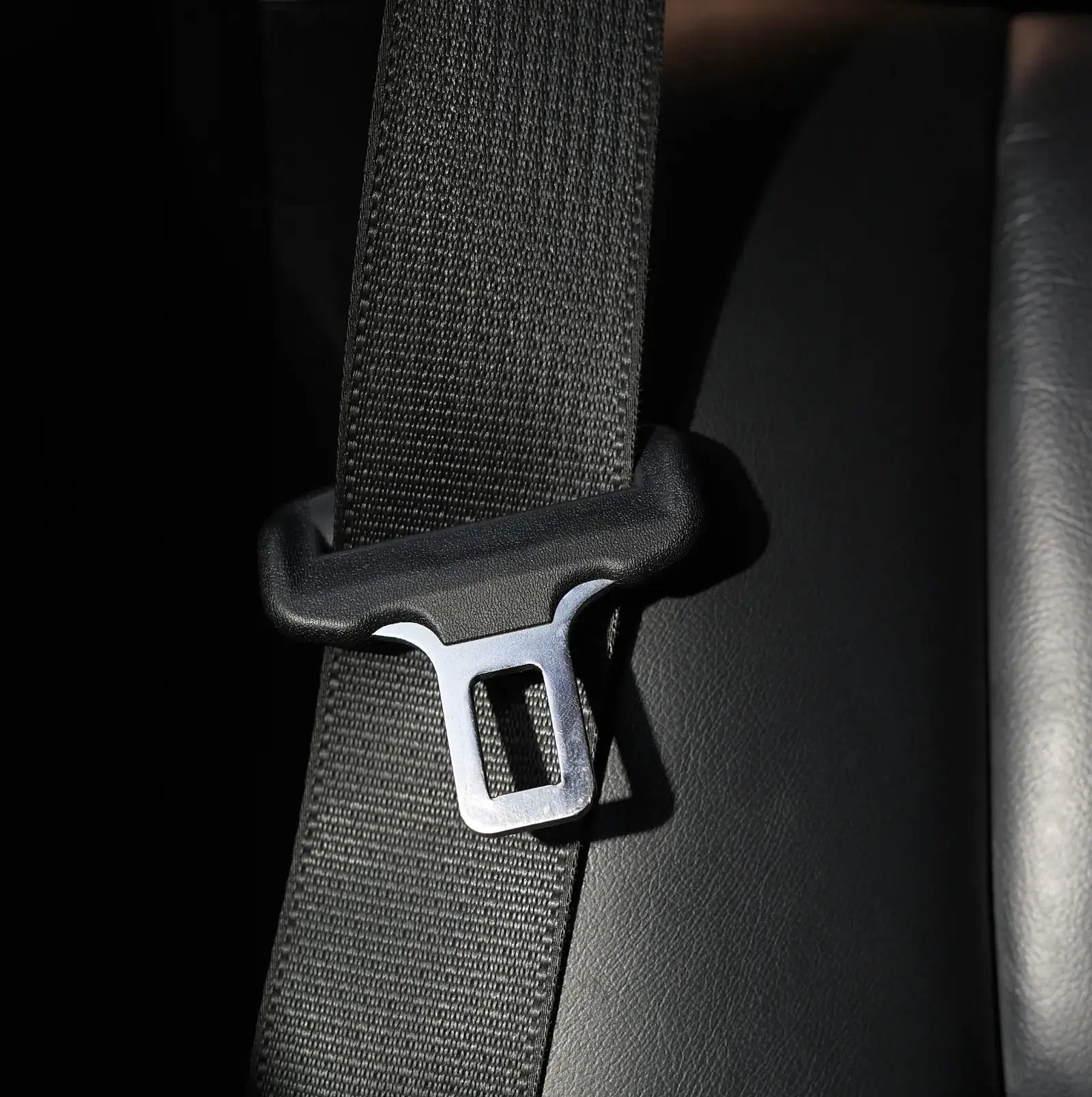
Latch plate · Webbing loop
Terminology in this field is inconsistent. The same component is called a tongue, a latch plate or a clip depending on who is speaking; a stalk may be described as a buckle and vice versa. Working through that ambiguity is part of handling an enquiry properly.
Category awareness
Knowing where a requirement belongs — passenger vehicle, commercial vehicle, replacement or component-level — before discussing specifics, because the right questions differ by category.
Application awareness
Understanding how the vehicle is actually used. A belt cycled forty times a day in a delivery van lives a different life from one used twice a day in a private car, and that shapes inspection and replacement thinking.
Vocabulary translation
Turning an informal description — "the clip is not clicking", "the strap will not pull back in" — into the component that is actually being described, so the enquiry moves forward instead of circling.
Knowing the limits
Recognising where general product knowledge ends and vehicle-specific engineering begins. Anchorage design, torque figures and pretensioner-linked systems belong to the vehicle manufacturer's documentation and to qualified professionals.
Quality in a restraint is not a single attribute — it is the sum of several, and a weakness in any one of them undermines the rest. These are the aspects worth raising in any serious conversation about a seat belt product.
WebbingWeave consistency, edge finish, stitching and resistance to abrasion and UV exposure
HardwareBuckle and tongue engagement, release action, surface finish and corrosion resistance
FitmentCorrect belt length, stalk type, bolt size and mounting geometry for the vehicle
DocumentationWhatever product information the supply chain genuinely provides for the item in question
ConditionFor anything already in service — visible wear, contamination, damage or previous load
A deliberate omission. We do not publish claimed certifications, approval numbers or test results on this website. Where a specific product carries documentation, that documentation is discussed during the enquiry against the actual item — not summarised into a marketing badge.
05 — Responsible Communication
What we will and will not tell you
Safety products attract confident language. We would rather be useful than impressive, so we are explicit about where our input stops.
✓
What you can expect from us
Plain explanations of belt types, components and how they relate to a vehicle.
Questions that help narrow a requirement instead of guessing at it.
A clear statement when something needs to be confirmed on the vehicle itself.
General educational information kept visibly separate from product-specific detail.
Referral to your vehicle handbook and to qualified professionals where that is the right answer.
✕
What you will not find here
Guaranteed safety outcomes — no restraint can promise a result in a real incident.
Invented certifications, approval claims or test figures.
Fabricated customer counts, case studies or testimonials.
Encouragement to fit a safety-critical component yourself without qualified support.
Advice that replaces your vehicle manufacturer's instructions or applicable regulations.
06 — Our Approach to Enquiries
How an enquiry is handled
Four working stages, from the message you send to the point where a commercial discussion makes sense.
Read it properly
Your description is read as written, including photographs and part markings. If something is ambiguous, that is noted rather than assumed away.
Place it in a category
The requirement is matched to the right product family and seating position, which determines what still needs confirming before anything useful can be said.
Come back with specifics
Relevant product details are shared, along with any open questions. Where suitability depends on the vehicle, that dependency is stated plainly.
Take it forward
Once the requirement is settled, quantities, commercial terms and next steps are discussed directly with you.
Business information. Details that are not yet confirmed for publication — such as registered address, office hours or company history — are deliberately left off this website rather than filled in with placeholder text. Contact details that are confirmed appear on the Contact page.
Start Here
Tell us what the vehicle needs
Vehicle, seating position, quantity, and a photograph if you have one. That is usually enough to get a useful answer moving.