Passenger Vehicles
Hatchbacks, sedans, SUVs and MPVs, across front, rear and centre-rear seating positions.
Automotive Restraint Solutions
Seat Belt Trader is a dedicated resource for automotive seat belts, vehicle restraint components and trade enquiries. We help buyers understand what they are specifying — belt configuration, seating position, vehicle application — so an enquiry can be answered accurately the first time.
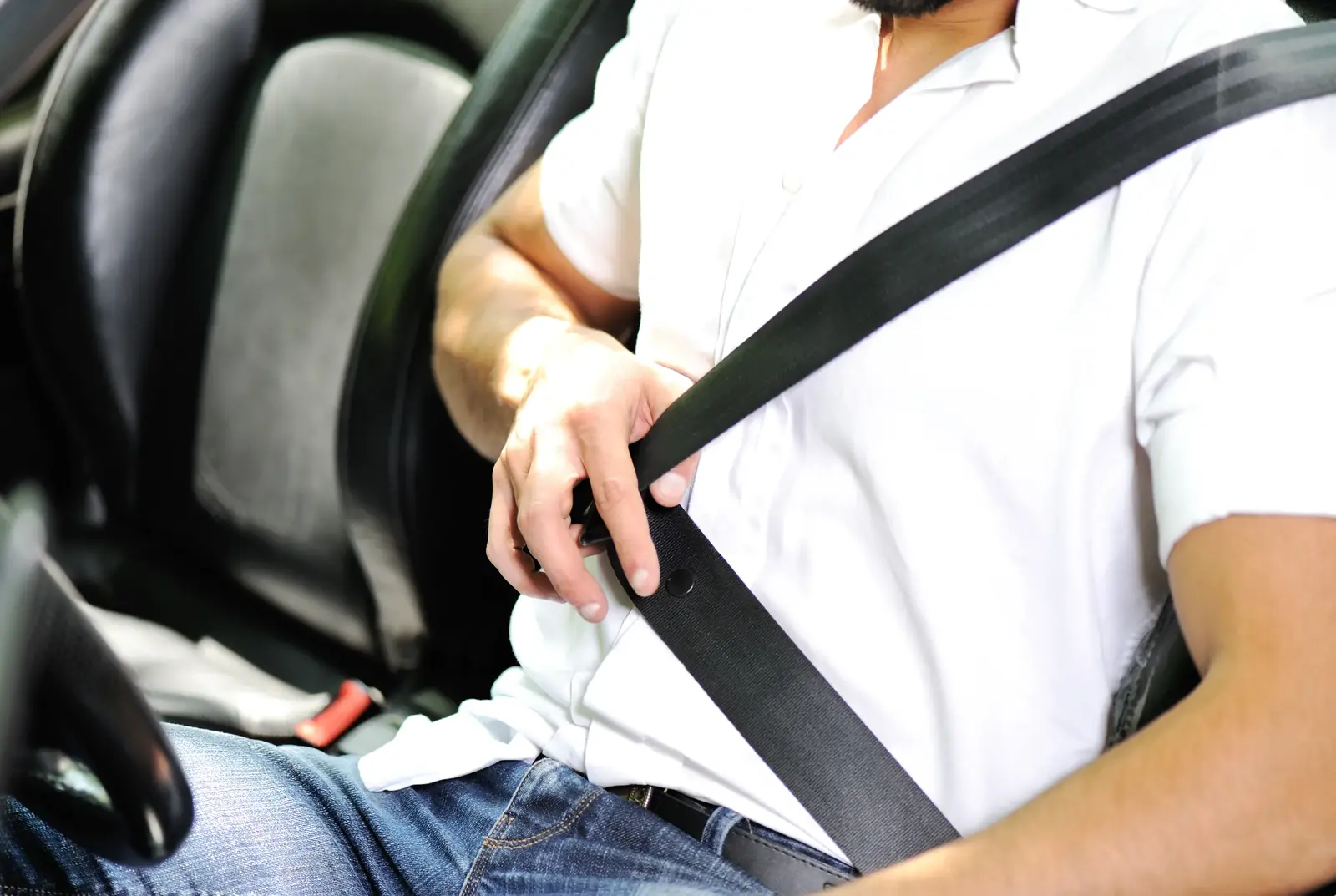 Three-point restraint · Front seating position
01 — Why It Matters
Occupant restraint is the foundation of vehicle safety. Airbags, crumple zones and structural design are all engineered around the assumption that an occupant is held in position by a correctly fitted, correctly worn seat belt. When the belt is not right for the vehicle or the seating position, the rest of the system cannot do its job as intended.
That is why selection matters far more than it first appears. A belt assembly is not simply a length of webbing — it is a matched set of webbing, buckle, tongue, retractor and mounting hardware, dimensioned for a particular seat, a particular anchorage layout and a particular kind of use.
Passenger cars, light commercial vehicles, buses, tractors, utility vehicles and specialised equipment all place different demands on a restraint. Belt length, stalk type, retractor behaviour, bolt sizes and mounting angles differ between them, and a component that physically fits is not automatically the component that belongs there.
Our role is to make that clearer. Before an enquiry is answered, the vehicle, the seating position and the intended application are the starting point — because those three details determine almost everything else.
02 — Product Directory
Each category below explains what the products are, where they are typically used and what to confirm before enquiring. Availability and suitability vary by vehicle and application.
Full product overview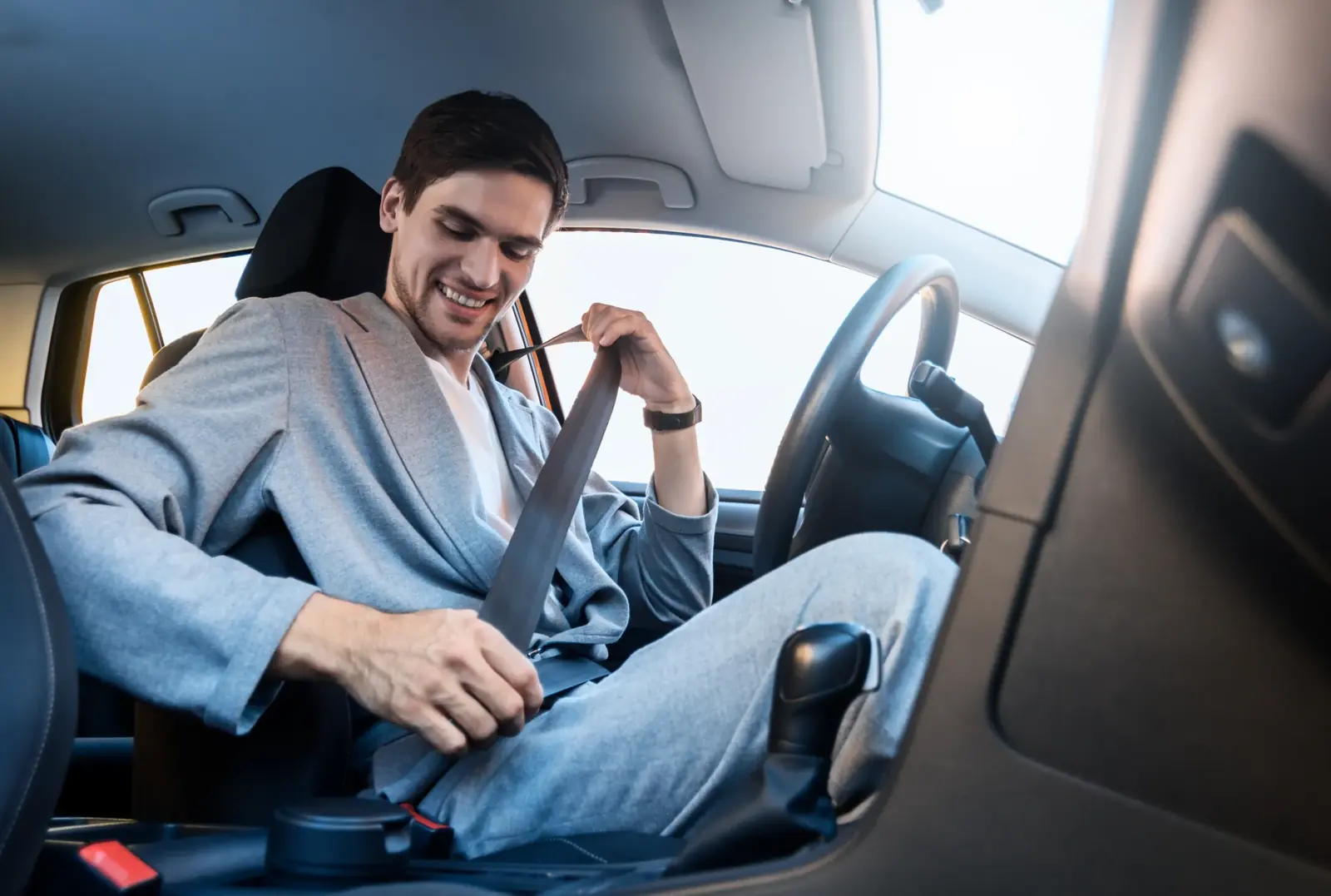
Three-point and two-point assemblies for passenger vehicles, covering front and rear seating positions.
View categoryRestraint solutions considered for trucks, buses, vans, utility and fleet vehicles, where duty cycle and cabin layout differ from passenger cars.
View categoryWhat to check when an existing belt assembly is worn, damaged or no longer operating as intended.
View category 04Webbing, buckles, tongues, retractors and mounting hardware explained part by part.
View category 05The wider picture — how belt type, anchorage and seating position fit together across vehicle classes.
View overview03 — System Anatomy
A modern belt assembly holds an occupant against the seat, then manages how that occupant moves during a sudden change in speed. The description below is general and educational — the exact design, materials and behaviour vary between manufacturers, vehicles and belt types.
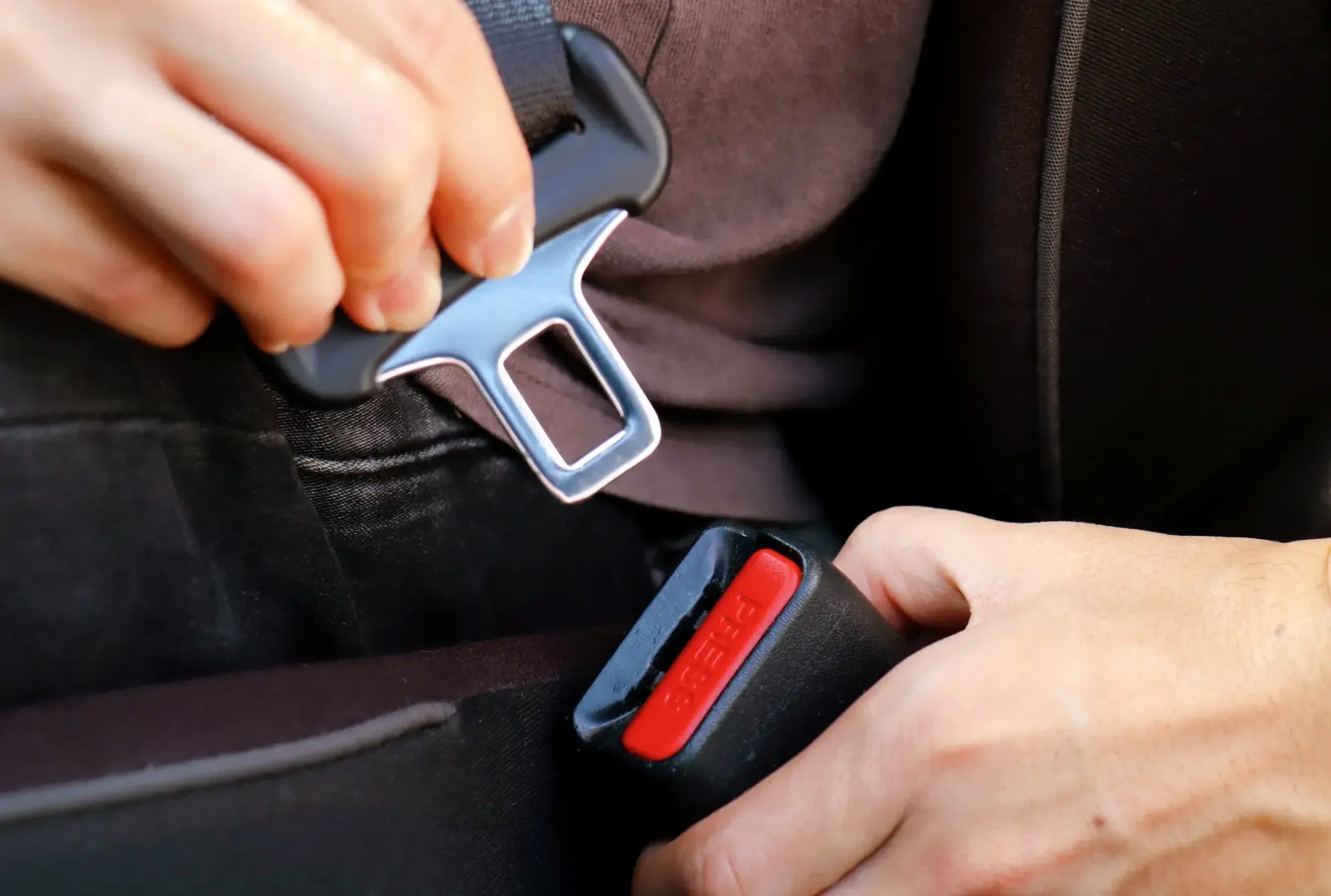 Tongue engaging the buckle
The woven strap that carries the load and spreads it across the stronger parts of the body. Its weave, width and finish are chosen for strength, controlled stretch and resistance to abrasion and sunlight. Cuts, fraying, chemical staining or heavy fading are all reasons to have webbing examined.
The metal plate fixed to or sliding along the webbing that locks into the buckle. On a three-point belt it usually slides freely, allowing the same length of webbing to serve both the lap and shoulder sections while the belt is being put on.
The receiving half of the latch, normally mounted on a stalk or short strap beside the seat. It should accept the tongue with a clear, positive click and release cleanly when the button is pressed — with no need to wiggle, force or hold the belt at an angle.
The spool assembly that stores unused webbing and takes up slack so the belt sits close to the body. Retractors are typically designed to lock under sudden vehicle deceleration, rapid webbing withdrawal, or both, depending on the mechanism used.
The part of the retractor that stops webbing paying out at the moment it matters. Some designs also offer a switchable mode used when securing a child restraint. Behaviour differs by vehicle, so the vehicle handbook is the authority on how a particular belt is meant to operate.
The reinforced mounting locations on the vehicle structure that the assembly bolts to. Anchorage position, bolt size and mounting angle are part of the vehicle's design — which is why belt assemblies are matched to a vehicle rather than fitted generically.
04 — Where They Are Used
The same broad component families appear across very different vehicles — but the specification behind them changes with the cabin, the seat and the way the vehicle is used.
Hatchbacks, sedans, SUVs and MPVs, across front, rear and centre-rear seating positions.
Trucks, tippers, vans and buses, where cabins are taller, seats larger and daily use heavier.
Pickups, off-road and site vehicles that face dust, moisture and constant belt cycling.
Mixed fleets where inspection intervals and consistent replacement planning matter most.
Additional or repositioned seats where the belt must suit both the seat and its anchorage.
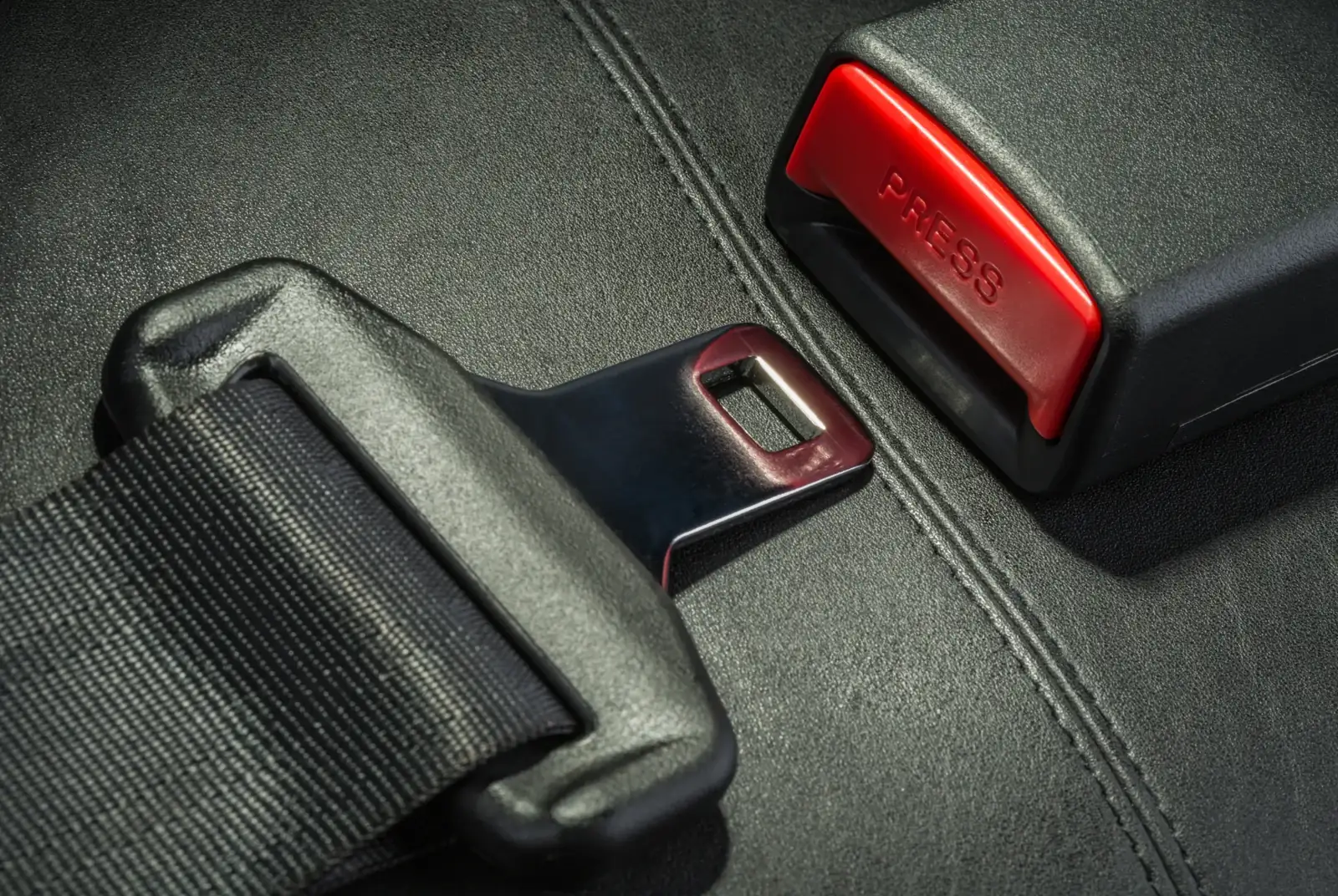 Buckle housing · Latch plate
05 — Quality & Compatibility
A restraint only performs as designed when every part of it is right — the material, the match to the vehicle, the way it was installed, and the condition it is kept in. These are the factors worth examining before anything is ordered or fitted.
Webbing weave, stitching and hardware finish determine how a belt handles load, abrasion and years of sunlight. Visual similarity between two belts says very little about how they are built.
Belt length, stalk type, retractor style, bolt size and mounting angle are all vehicle-specific. A component that can be bolted in is not necessarily the component intended for that position.
Anchorage points, torque and routing are engineering requirements, not preferences. Fitting is work for a qualified automotive professional following the vehicle manufacturer's instructions.
Belts are consumable safety equipment. Regular checks — and a willingness to replace rather than tolerate a fault — are what keep a restraint dependable across the life of the vehicle.
06 — How It Works
Five steps, no guesswork. The more precisely a requirement is described at the start, the more useful the response can be.
Tell us the vehicle, the seating position, the quantity and what the belt is for. Photographs of the existing assembly help considerably.
The requirement is placed against the right family — automotive, commercial vehicle, replacement or individual component.
Relevant product details are shared with you, together with anything that still needs confirming on the vehicle side.
You confirm what fits the application. Where a point is uncertain, we say so rather than assume.
Commercial terms, quantities and next steps are taken forward directly with you.
07 — Safety Knowledge
Most of what determines whether a seat belt does its job is decided long before an incident: how it is worn, whether faults are noticed, and whether they are acted on.
Lap section low across the hips, shoulder section flat across the middle of the shoulder and chest. Never under the arm or behind the back, and never twisted.
Run the webbing through your hand, check the buckle latches and releases cleanly, and confirm the retractor pulls the slack back in without hesitating.
Cuts, fraying, a sluggish retractor or a buckle that needs persuading are reasons for professional inspection — not something to work around.
Child restraints must suit the child, the seat and the vehicle. Follow the restraint manufacturer's instructions and your vehicle handbook together.
08 — Common Questions
A short selection. The full list covers belt types, inspection, compatibility and what to include in an enquiry.
Read all FAQsA 2-point belt secures across the lap only, using two anchorage points. A 3-point belt adds a diagonal shoulder section and a third anchorage, forming a continuous strap across the lap and torso. The 3-point layout is what most modern passenger vehicles use for front and outer rear positions, because it restrains the upper body as well as the pelvis.
A quick visual check is worth doing routinely, and a professional inspection is appropriate whenever something has changed — visible damage to the webbing, a buckle that does not latch or release cleanly, a retractor that will not take up slack, or after any collision. Your vehicle handbook and service schedule set out the checks specific to your vehicle.
No. Webbing carries the load, and damage to it reduces the belt's ability to do that. Cuts, fraying, burns, heavy chemical staining or significant degradation are all reasons to have the assembly assessed by a qualified automotive professional rather than kept in service.
Because the assembly is designed around the vehicle, not the other way around. Webbing length, stalk type and length, retractor style, bolt size and mounting angle all follow from the vehicle's seat design and anchorage layout. Two belts can look alike and still belong in entirely different vehicles.
Vehicle make, model and year; the exact seating position; whether you need a complete assembly or a single component; the quantity; and clear photographs of the existing part, including any markings on the webbing or hardware. Those details let an enquiry be answered accurately rather than approximately.
Enquiries
Send us the vehicle, the seating position and the quantity — and we will take it from there. If it is easier to talk it through, the line is open.